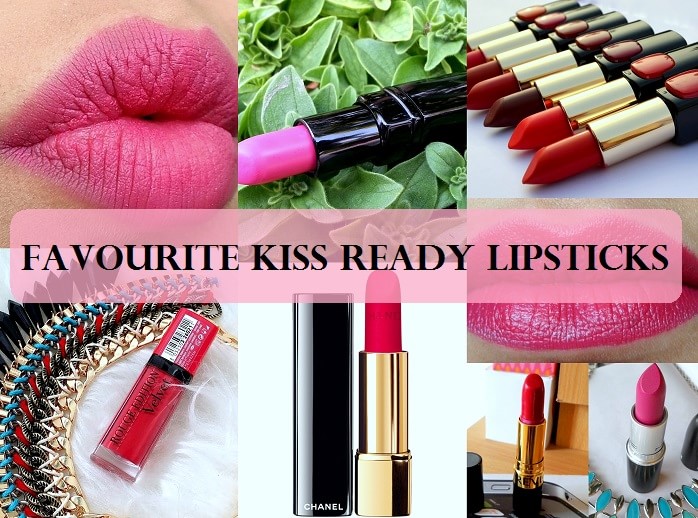
Lipstick is a cosmetic that applies color, texture, and protection to the lips.Many colors and types of lipstick exist. Some lipsticks are also lip balms, to add both color and hydration.
Although the name originally applied to the baton (stick) of material within a tubular container usually around 10mm in diameter and 50mm in length, the term now generally relates to the material itself, regardless of method of application
Lipstick trends
Throughout the early 20th century, lipstick came in a limited number of shades.
Dark red lipstick was one of the most popular shades throughout the 19th and 20th century, especially in the 1920s. Flappers wore lipstick to symbolize their independence. Lipstick was worn around the lips to form a "Cupid's bow," inspired by actress Clara Bow. At that time, it was acceptable to apply lipstick in public and during lunch, but never at dinner.
In the early 1930s, Elizabeth Arden began to introduce different lipstick colors. She inspired other companies to create a variety of lipstick shades. In the 1930s, lipstick was seen as a symbol of adult sexuality. Teenage girls believed that lipstick was a symbol of womanhood, yet adults saw it as an act of rebellion. Many Americans, especially immigrants, did not accept teenage girls wearing lipstick. A study in 1937 survey revealed that over 50% of teenage girls fought with their parents over lipstick.
In the mid-1940s, several teen books and magazines stressed that men prefer a natural look over a made-up look. Books and magazines also warned girls that wearing cosmetics could ruin their chances of popularity and a career. The implication of these articles was that lipstick and rouge were for teen girls who acted very provocatively with men.Despite the increased use of cosmetics, it was still associated with prostitution. Teen girls were discouraged from wearing cosmetics for fear that they would be mistaken for "loose" girls or prostitutes.
In 1950 chemist Hazel Bishop formed a company, Hazel Bishop Inc., to promote her invention of long-lasting, non-smearing 'kissproof' lipstick, which quickly gained acceptance. At the end of the 1950s, a cosmetic company named Gala introduced pale shimmery lipstick. Later, Max Factor created a popular lipstick color called Strawberry Meringue. Lipstick manufacturers began creating lipsticks in lavender, pale pink, white, and peach. Since parents generally frowned on teen girls wearing red lipstick, some teen girls began wearing pink and peach lipsticks, which became a trend. White or nearly white lipstick was popular in the 1960s.Rock groups such as the Ronettes and the Shirelles popularized white lipstick. Girls would apply white lipstick over pink lipstick or place under-eye concealer on their lips. During that time, many lipsticks were either matte, sheer, or slightly shiny. In the 1960s, lipstick was associated with femininity. Women who did not wear lipstick were suspected of mental illness or lesbianism.